Play Demon Solitaire Free Online
Demon Solitaire
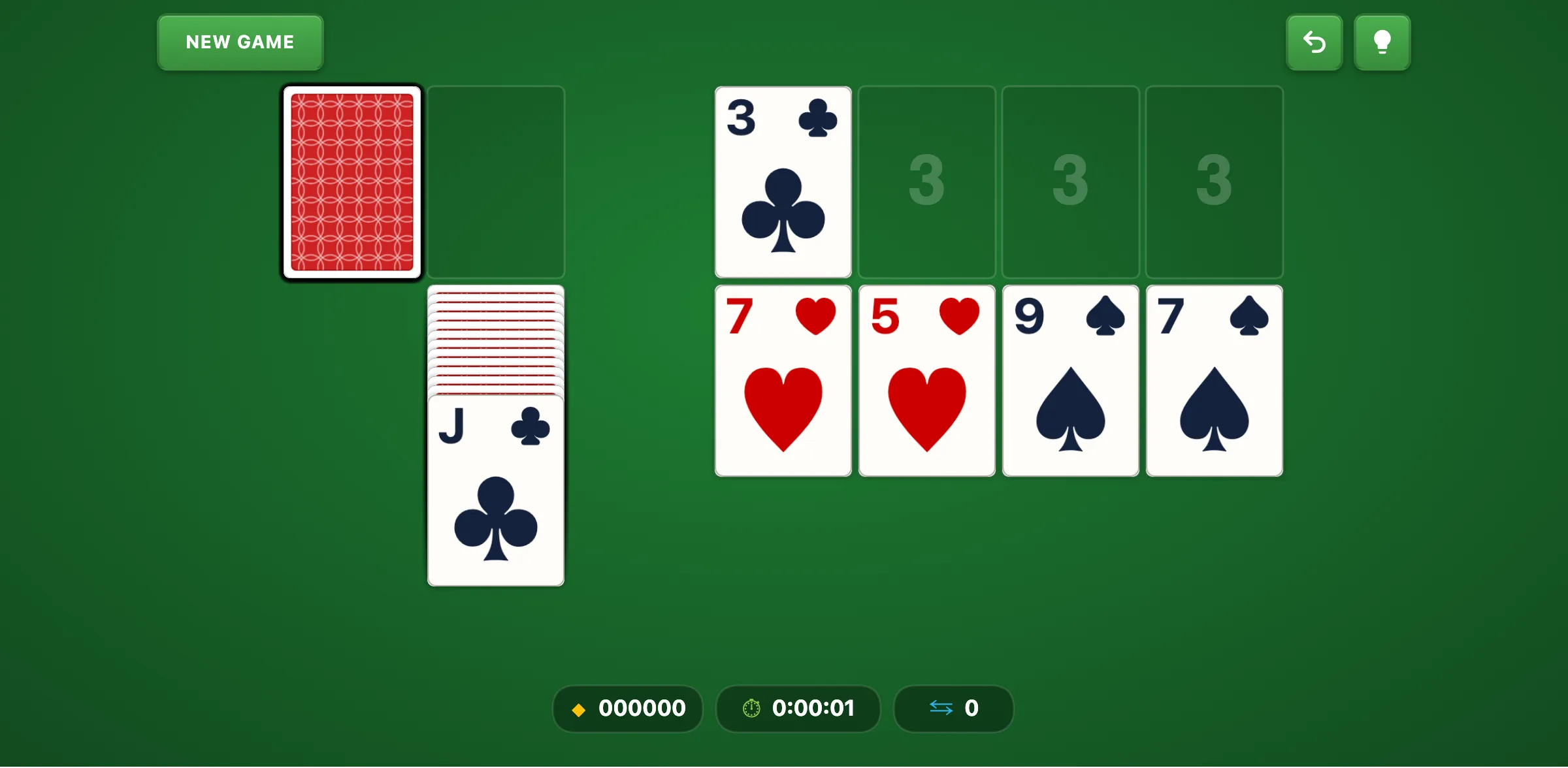
Demon Solitaire is the British name for Canfield — identical rules, different name. The 13-card reserve ("demon pile") dominates your strategy, foundations start from a random base card, and sequences wrap around. The name "Demon" perfectly captures the game's reputation: a fiendishly difficult patience game that confounded Victorian card players.
How to Play Demon Solitaire
Layout
Same as Canfield — Demon is the British name for Canfield. Stock pile, waste pile, 13-card reserve, 4 tableau columns, and 4 foundations starting from a random rank.
Objective
Same as Canfield — build all four foundations up by suit, wrapping around from the starting rank.
Step-by-Step Instructions
- Demon follows the exact same rules as Canfield (see Canfield for full instructions).
- The foundation starting rank is determined by the first card dealt to foundations.
- Build foundations up by suit, wrapping from King to Ace.
- Build tableau in descending order with alternating colors, also wrapping.
- Clear the 13-card reserve pile as quickly as possible.
- Empty tableau columns are auto-filled from the reserve.
- Win when all four foundations are filled.
Demon Guides & Strategy
Read our in-depth guides to master the rules and improve your win rate.
More Games Like Demon
Easy Demoneasy
Demon Easy applies relaxed rules to the classic Demon/Canfield game, making the notoriously difficult reserve-pile mechanic more forgiving. More deals are winnable, giving you spac...
Turn 1 Demonhard
Demon Turn 1 is the most accessible version of Demon/Canfield, drawing one stock card at a time. You see every card in the deck, which dramatically helps with planning your reserve...
Fascination Demonhard
Fascination is a Canfield variant with modified dealing rules that change the initial tableau setup. The reserve pile mechanic and wrapping foundations remain, but the altered star...
Why Play Demon Solitaire Online?
Demon Solitaire (Canfield's British cousin) is one of the most intense patience games. With a 13-card reserve pile, a random foundation rank, and wrapping sequences, it demands aggressive, forward-thinking play. Our free online version lets you use unlimited undo to master this notoriously difficult game at your own pace.
Game Features
- Casino Heritage — The British name for Canfield's famous casino game
- 13-Card Reserve — Clear the "demon pile" for maximum flexibility
- Random Foundation Base — Every game starts differently
- Unlimited Undo — Master the wrapping sequences at your own pace
- Smart Hints — Navigate complex reserve management strategy
- No Registration — Play instantly without signing up
Demon Tips and Strategies
Attack the demon pile relentlessly. Every empty tableau column pulls a card from the reserve automatically. Build tableau sequences that create these empties rather than chasing foundation plays. The random base card means some games have favourable starting positions — recognize them and play aggressively.
Demon Solitaire Rules
Scoring System
Demon Solitaire (a Canfield variant) scores 10 points per foundation card. Moving from waste to tableau earns 5 points, and flipping a face-down card earns 5 points. The 13-card reserve adds strategic depth to scoring opportunities.
Common Mistakes to Avoid
Demon (Canfield) players often forget the reserve pile. Always play from the reserve when possible — clearing it is essential. Don't rush foundation builds if those cards are needed for tableau sequences. The wrapping rule (K-A-2) catches many players off guard.
Demon Solitaire — Frequently Asked Questions
Everything you need to know about Demon Solitaire.
What is Demon Solitaire?
Demon Solitaire is a classic card game you can play for free online at Solitaire.fyi. No downloads or registration required — play instantly in your browser on any device.
Is Demon the same as Canfield?
Yes — Demon is the British name for Canfield. The rules are identical: 13-card reserve, foundations starting from a random rank, wrapping sequences, and auto-fill from reserve to empty tableau columns. The name "Demon" reflects the game's fearsome difficulty in British card-playing tradition.
How do I clear the reserve pile in Demon?
Play the top reserve card to the tableau or foundations whenever possible. When a tableau column empties, the top reserve card automatically fills it. Clearing the reserve is essential because it gives you access to all 52 cards and dramatically increases your flexibility.
What is the win rate for Demon Solitaire?
Demon (Canfield) has a low win rate of approximately 10-15% with good play. The combination of the random foundation base, the 13-card reserve, and wrapping sequences makes it one of the most challenging classic solitaire games.
How is Demon Solitaire laid out?
13 cards are dealt face-down to form the reserve pile (top card visible). One card is placed on the first foundation as the starter — the other three foundations build from this same rank. Four tableau columns receive one card each, and the remaining 31 cards form the stock pile (drawn 3 at a time).
Why is Demon called Demon?
The name comes from 19th-century British card-playing slang for "demonic" difficulty — the game is notoriously hard to win. Americans named it Canfield after Richard A. Canfield, the casino owner who popularised it as a betting game in the 1890s.
Is Demon different from Canfield?
No — Demon and Canfield are the same game with different names. "Canfield" is the American name (after casino owner Richard Canfield), while "Demon" is the British name. All rules are identical.
Is Demon Solitaire free to play?
Yes — 100% free at Solitaire.fyi with no hidden costs, no sign-up, and no ads that interrupt gameplay. Play unlimited games on desktop, tablet, or mobile.
What is a good win rate for Demon Solitaire?
Win rates vary by variant and skill level. Experienced players typically win 30-60% of games depending on the variant. Using undo and hints can help you improve.
History of Demon Solitaire
Demon Solitaire is the British name for Canfield, one of the most famous casino patience games. In Britain, the name "Demon" reflects the game's notoriously low win rate and punishing difficulty. The game was popularised in British card rooms and pubs throughout the 20th century. While Americans know it as Canfield (named after casino owner Richard A. Canfield), the British "Demon" name has persisted across the Commonwealth, and many digital solitaire collections list both names.
Cognitive Benefits of Demon
Demon exercises the same adaptive planning as Canfield — the random foundation base and wrapping sequences demand recalculation each game. The intense reserve management adds a resource-optimization dimension that builds multi-tasking cognitive skills.