How to Play Forty Thieves — Rules, Strategy & Tips
Forty Thieves (also called Napoleon at St Helena or Big Forty) is one of the most challenging solitaire games ever devised. Using two full decks, it combines same-suit building with a brutal one-card-at-a-time movement restriction. With a win rate around 10%, every victory is earned through careful planning and patience.
The Setup
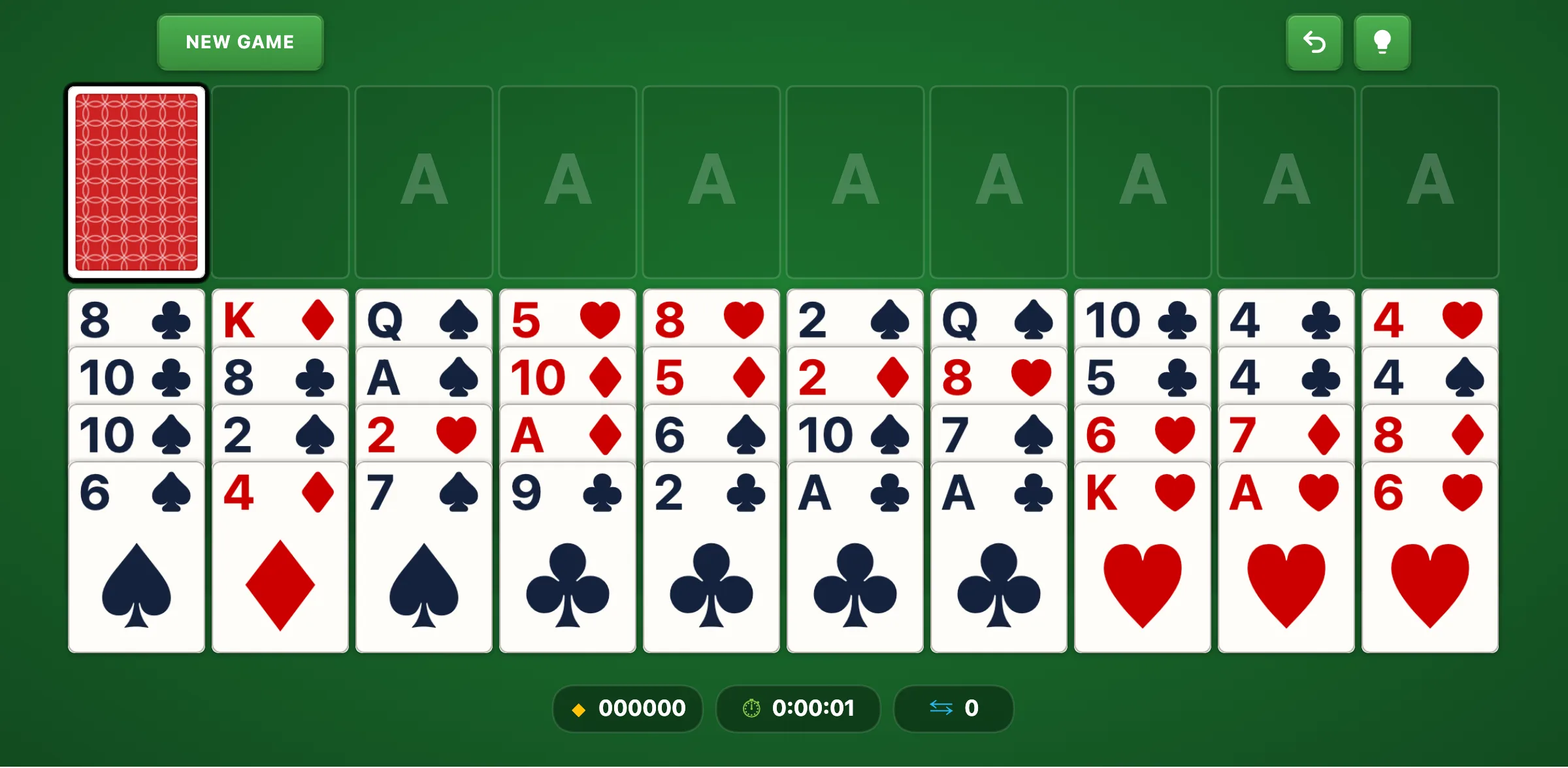
Forty Thieves uses two standard 52-card decks (104 cards total):
- Tableau: 40 cards dealt face-up into 10 columns of 4 cards each. All cards are visible from the start.
- Foundations: 8 empty piles — build each up by suit from Ace to King (two foundations per suit).
- Stock pile: The remaining 64 cards, face-down. Draw one card at a time to the waste.
- Waste pile: Cards drawn from the stock go here. Only the top card is playable.
The name "Forty Thieves" comes from the 40 cards initially dealt to the tableau.
Rules
- Tableau building: Build down by the same suit. For example, 7♠ can only go on 8♠ — not on 8♥ or 8♣. This is the key rule that makes the game so difficult.
- One card at a time: You can only move a single card per move. There are no group moves, even if cards form a perfect sequence.
- Empty columns: Any single card can fill an empty column. Empty columns are extremely valuable — they're your only way to rearrange cards.
- Foundations: Build up by suit from Ace to King. Once placed, cards cannot be moved back.
- Stock: Draw one card at a time to the waste pile. One pass only — when the stock is empty, it's gone.
How to Play — Step by Step
Step 1: Find Aces
Scan the 10 columns for Aces. Move any Aces at the bottom of columns to foundations immediately. For Aces buried under other cards, plan a path to uncover them.
Step 2: Build same-suit sequences
Look for opportunities to stack cards in descending same-suit order. A sequence like 9♦-8♦-7♦ is ideal because when you eventually move the 9♦, the others can follow one at a time.
Step 3: Create empty columns
Your top priority after moving Aces. An empty column acts like a free cell — you can park a card there temporarily while rearranging. With 10 columns, creating even 1-2 empty spaces dramatically increases your options.
Step 4: Draw strategically
Draw from the stock when you have no useful moves on the tableau. Since you only get one pass, every draw should ideally result in a playable card. If the drawn card has no immediate use, it buries in the waste.
Step 5: Build foundations steadily
Move cards to foundations as opportunities arise, but don't strip the tableau bare of useful cards. A card on the foundation is permanent — make sure you won't need it for tableau building.
Strategy Guide
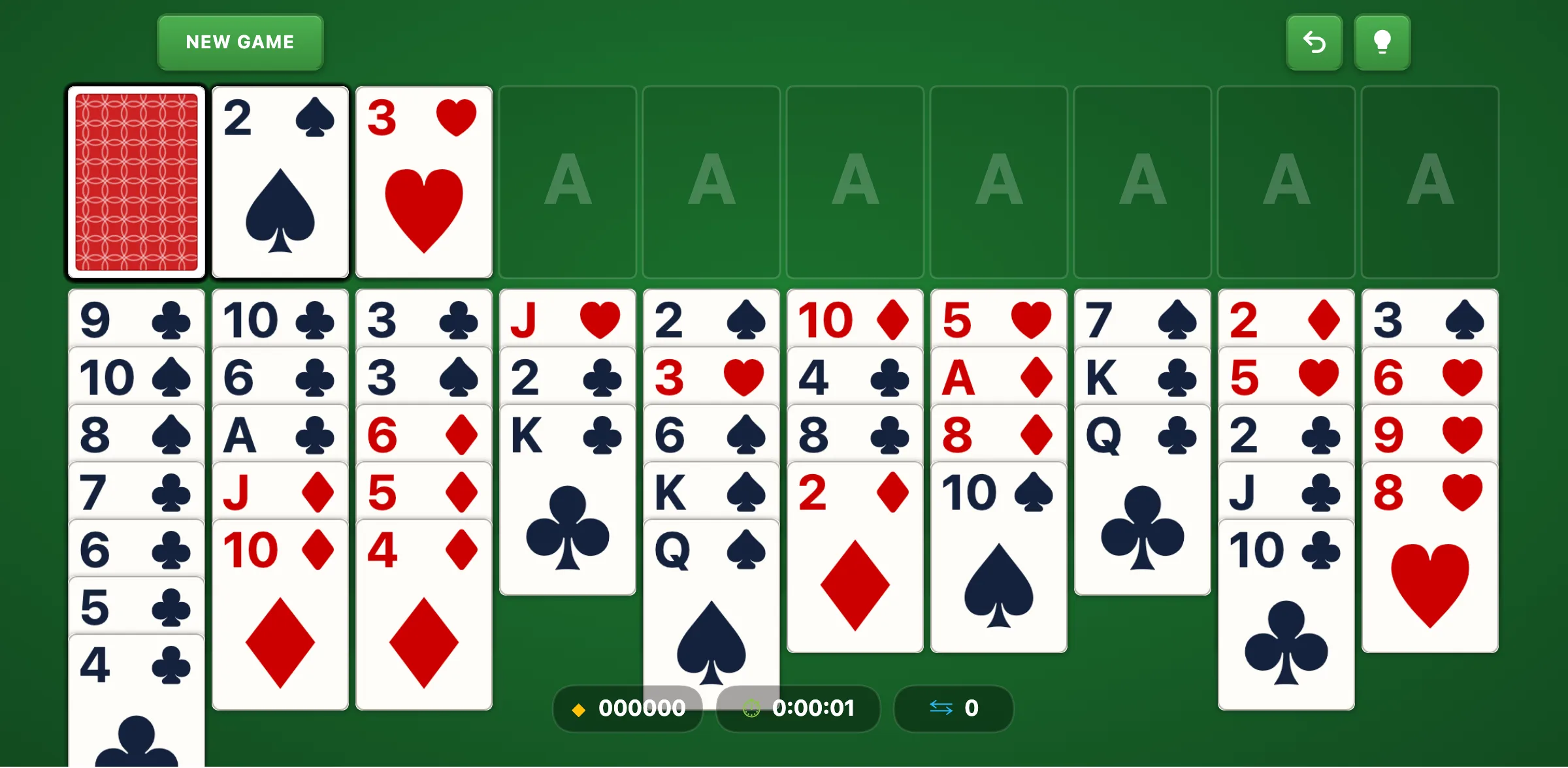
1. Empty columns are everything
In a game where you can only move one card at a time, empty columns are your lifeline. They let you temporarily park cards while rearranging sequences. Create empty columns as early as possible and guard them jealously — don't fill them without a clear plan to empty them again.
2. Build same-suit sequences patiently
Since you can only move one card, a 5-card sequence requires 5 moves (and 4 empty spaces) to relocate. Short, same-suit sequences are manageable. Long sequences become immovable traps if you don't have enough empty columns.
3. Avoid filling empty columns with random cards
If you create an empty column, resist the temptation to dump a card there unless it's part of a plan. An occupied empty column is just another crowded column.
4. Track both copies of each card
With two decks, there are two of every card. If you need a 6♠ to extend a sequence and one is buried deep, check if the other copy is accessible. This double-card awareness is unique to two-deck games and crucial for planning.
5. Don't rush cards to foundations
Moving a 5♦ to the foundation feels like progress, but if you need that 5♦ on the tableau to hold a 4♦, you've made the game harder. Low cards (Ace-3) are always safe to move up. Higher cards — think carefully.
6. Accept that most deals are unwinnable
With a ~10% win rate, most games end in a loss regardless of strategy. Don't feel bad about losing — focus on recognizing early whether a deal has potential, and abandon hopeless games early to try a new deal.
Forty Thieves Variants
| Variant | Columns | Cards Dealt | Key Difference |
|---|---|---|---|
| Forty Thieves | 10 | 40 | Standard rules — ~10% win rate |
| Streets | 10 | 40 | Alternating-color building (much easier) |
| Busy Aces | 12 | 48 | 12 columns instead of 10 |
| Josephine | 10 | 40 | Group moves allowed |
| Limited | 12 | 36 | 3 cards per column, 12 columns |
Common Mistakes
- Filling empty columns carelessly: Empty columns are your most valuable resource. Never fill one without a plan to empty it again.
- Building long sequences you can't move: A 7-card same-suit sequence looks impressive, but it needs 6 empty spaces to relocate. Keep sequences short and mobile.
- Moving cards to foundations too eagerly: Foundation moves are permanent. Make sure you won't need the card on the tableau.
- Drawing too fast from the stock: Each draw might bury a useful card in the waste. Only draw when the tableau is truly stuck.
- Not tracking duplicate cards: Forgetting the second copy of a key card leads to wasted moves planning around a "buried" card when its twin is accessible.
Ready for the challenge? Play Forty Thieves Solitaire free online → If it's too brutal, try Spider Solitaire for a similar same-suit building game with group moves allowed.