How to Play Golf Solitaire — Rules, Strategy & Tips
Golf Solitaire is a fast, addictive card game where you clear tableau columns by playing cards one rank higher or lower than the waste card. Games take 2–5 minutes, making it perfect for quick breaks. The name comes from the scoring: like golf, fewer remaining cards means a better score.
The Setup
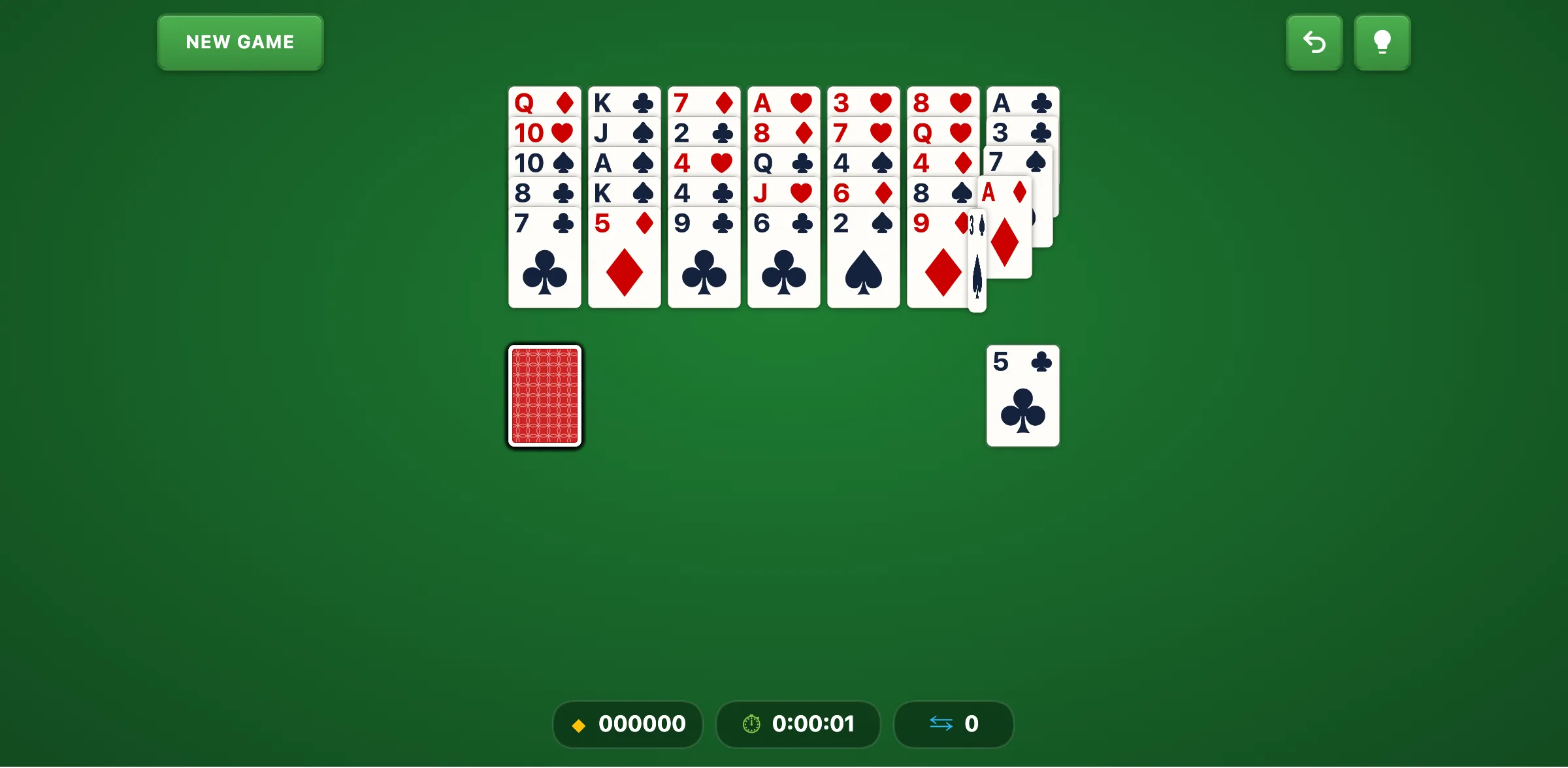
Golf Solitaire uses one standard 52-card deck:
- Tableau: 35 cards dealt into 7 columns of 5 cards each. All cards are face-up and visible, but only the bottom card of each column is playable.
- Stock pile: The remaining 17 cards are placed face-down.
- Waste pile: One card is dealt face-up from the stock to start. This is your active card for matching.
How to Play — Step by Step
Step 1: Check the waste card
Look at the face-up waste card. Scan the bottom card of each tableau column for a card that is one rank higher or one rank lower, regardless of suit.
Step 2: Play matching cards
Click a matching card to move it to the waste pile. It becomes the new active card. Continue playing cards that match the new waste card — this builds a "chain."
For example: waste shows 5 → play a 6 → play a 7 → play a 6 → play a 5. You can go up and down freely.
Step 3: Draw from the stock
When no tableau card matches the waste, draw from the stock. The new card becomes the waste card. With only 17 stock cards, every draw counts.
Step 4: Clear the tableau
Remove as many cards as possible from the 7 columns. You win by clearing all 35 tableau cards. Your score is the number of cards remaining — 0 is a perfect game.
Key Rules
| Rule | Standard Golf | Relaxed Golf |
|---|---|---|
| King wrapping | No — Kings are dead ends | Yes — K↔A allowed |
| Build direction | Up or down | Up or down |
| Suit matching | Any suit | Any suit |
| Stock cards | 17 | 17 |
| Win rate | ~30% | ~50% |
Strategy Tips
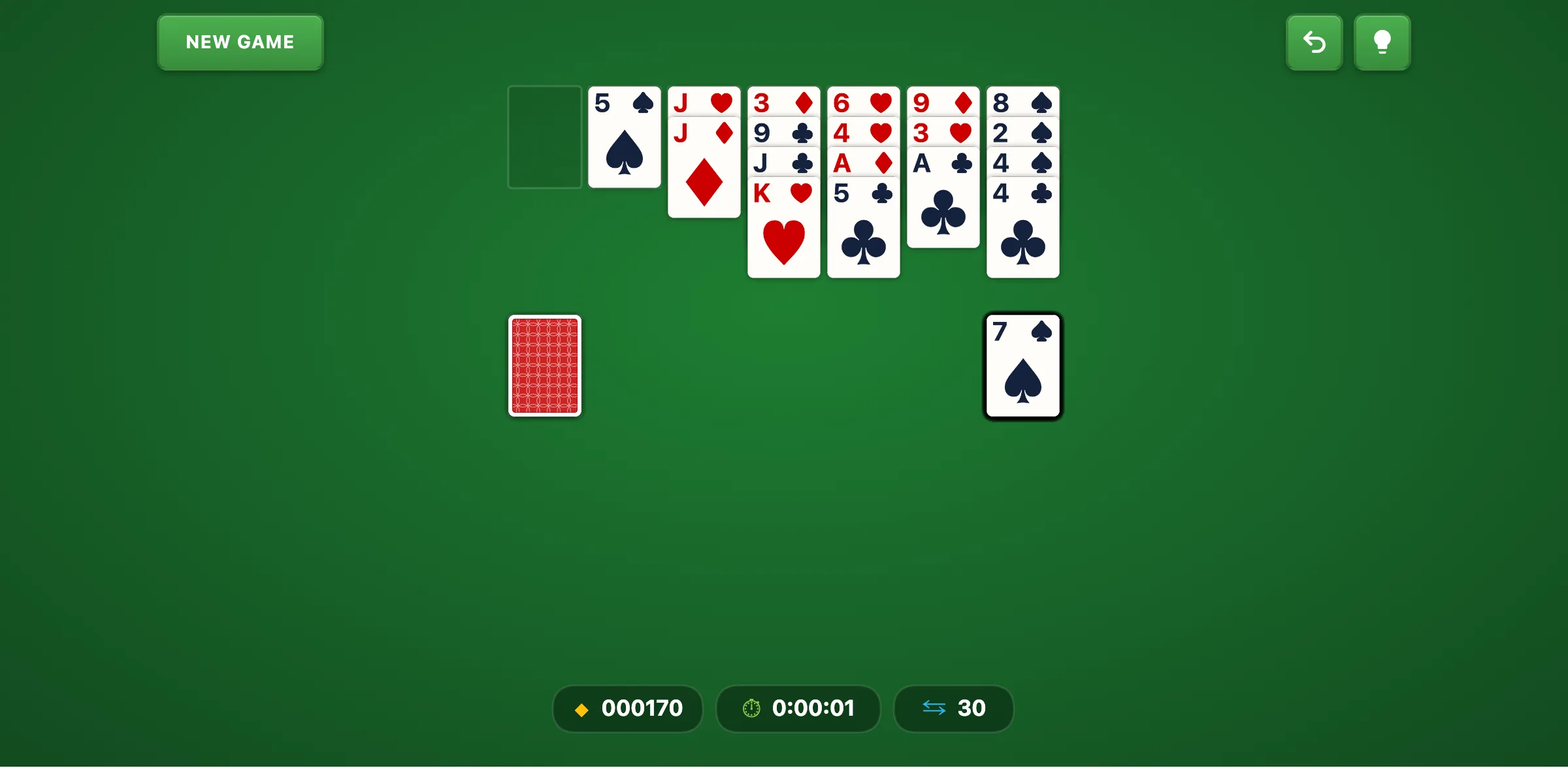
1. Scan all 7 columns before each move
When multiple cards match the waste, don't just click the first one you see. Check which play extends the chain further. If the waste is a 7 and both column 2 and column 5 have a 6, check what's above each 6 — pick the one that enables the next link in the chain.
2. Avoid Kings (in standard rules)
In standard Golf, nothing plays on a King — it kills your chain. If you have a choice between playing a Queen (which could chain to a Jack) or a King (dead end), play the Queen. Only play Kings when you have no other option.
3. Look for "reversals"
Chains can go up and back down (or vice versa). A sequence like 4→5→6→7→6→5→4→3 is perfectly valid and clears 8 cards. Look for these zigzag patterns across your columns.
4. Clear short columns first
Emptying a column entirely doesn't directly help (empty columns can't be refilled), but it reduces the number of places you need to scan. Focus chains through columns that are already partially cleared.
5. Save your stock draws
You only have 17 draws. If you draw too freely early on, you'll run out when you need them most. Exhaust all chain possibilities before drawing.
Scoring (Golf-Style)
Traditional Golf scoring tracks your performance across multiple rounds:
- Par: Each round has a par (usually 4 remaining cards).
- Under par: Clearing all cards or leaving fewer than par is a "birdie" or better.
- Over par: More remaining cards means "bogey" or worse.
- 9 or 18 holes: Play multiple rounds and sum your scores — lowest total wins.
This multi-round format is what makes Golf Solitaire endlessly replayable — you're always trying to beat your overall score.
Common Mistakes
- Playing Kings too early: In standard rules, a King kills the chain. Hold off unless it's your only move.
- Not scanning all columns: With 7 columns to check, it's easy to miss a playable card — especially after a long chain when your focus drifts.
- Drawing when a play exists: Always triple-check before drawing from the stock. Every unnecessary draw is a wasted opportunity.
- Ignoring chain direction: Remember you can go up AND down in the same chain. Don't stop a chain just because the direction changes.
Ready to play? Try Golf Solitaire free online → For a similar game with hidden cards and a peak layout, try TriPeaks Solitaire.