How to Play TriPeaks Solitaire — Rules, Strategy & Tips
TriPeaks (also called Tri Towers or Three Peaks) is a fast-paced solitaire game where you clear three overlapping peaks of cards by building chains one rank up or down. It combines the accessibility of Golf Solitaire with a more interesting layout and streak-based scoring that rewards planning.
The Setup
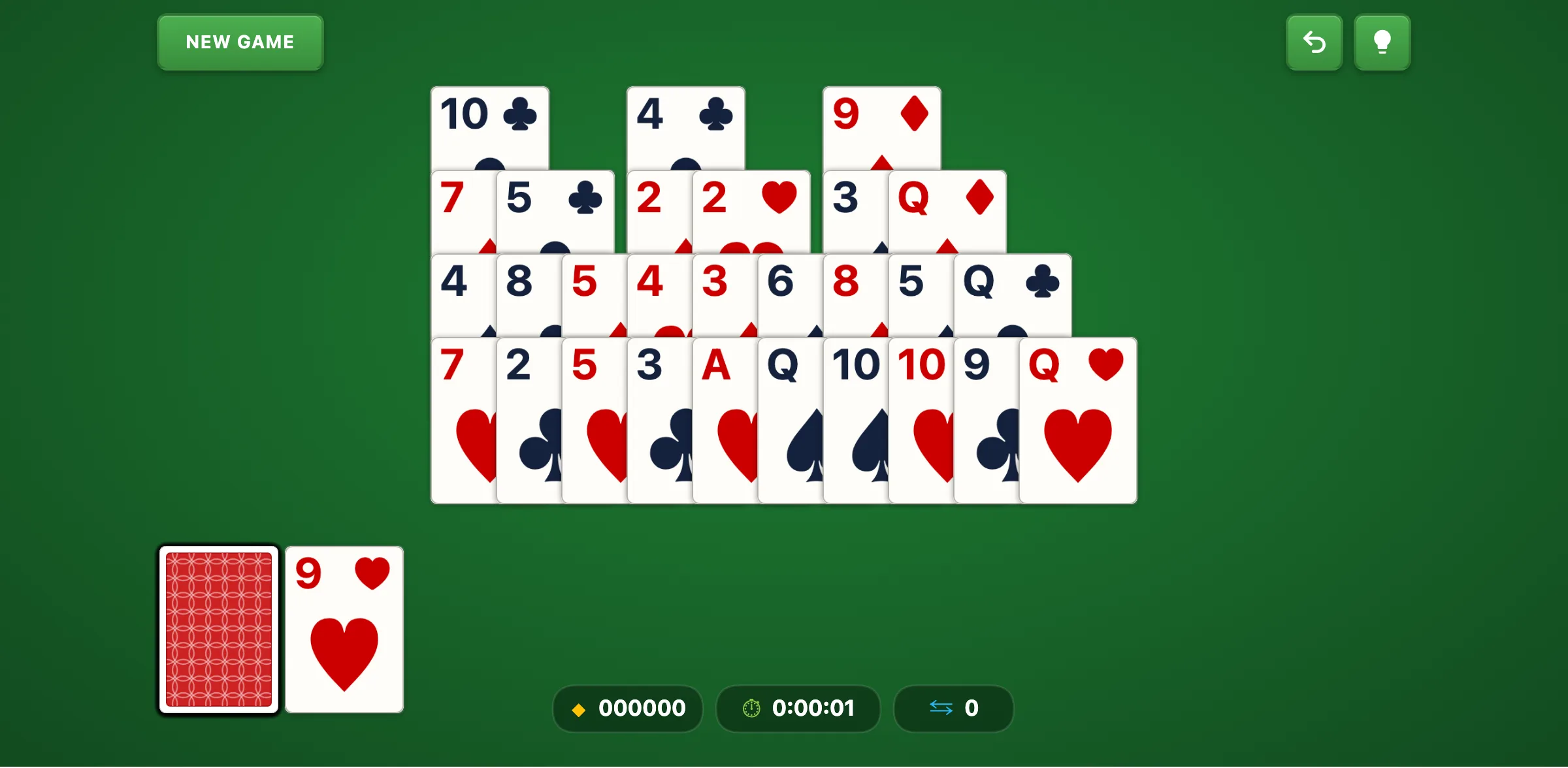
TriPeaks uses one standard 52-card deck:
- Three peaks: 28 cards arranged in three overlapping pyramid shapes. Each peak has 4 rows — the top card of each peak is alone, and the base row is shared. Some cards are face-down and get revealed as overlapping cards are removed.
- Stock pile: The remaining 24 cards are placed face-down.
- Waste pile: One card is dealt face-up to start. This is your "active" card — you build chains from it.
How to Play — Step by Step
Step 1: Look at the waste card
The top card of the waste pile is your reference. You can remove any exposed peak card that is exactly one rank higher or lower than the waste card, regardless of suit.
For example, if the waste shows a 9, you can remove an 8 or a 10 from the peaks.
Step 2: Build chains
Each card you remove becomes the new waste card. Keep going as long as you can find cards one rank away. A chain might look like: 9 → 8 → 7 → 8 → 9 → 10 → J → Q → K → A (wrapping around).
Longer chains earn dramatically more points due to the streak multiplier.
Step 3: Draw from the stock
When no exposed card is one rank away from the waste, draw a card from the stock. This becomes the new waste card — but it resets your chain multiplier to zero. Minimize draws to maximize your score.
Step 4: Reveal hidden cards
When you remove a card from the peaks, any face-down card that was partially covered by it gets flipped face-up and becomes available. Clearing cards higher in the peaks reveals more hidden cards.
Step 5: Clear all three peaks
You win when every card from the three peaks has been removed. You lose if the stock is empty and no moves remain with cards still on the peaks.
Scoring
| Chain Length | Points per Card | Total Chain Points |
|---|---|---|
| 1 card | 1 | 1 |
| 3 cards | 1, 2, 3 | 6 |
| 5 cards | 1, 2, 3, 4, 5 | 15 |
| 10 cards | 1 through 10 | 55 |
| 15 cards | 1 through 15 | 120 |
Drawing from the stock resets the multiplier. Two 5-card chains (30 points) are worth less than one 10-card chain (55 points) — always try to extend your current chain before drawing.
Strategy Tips
1. Extend chains, don't break them
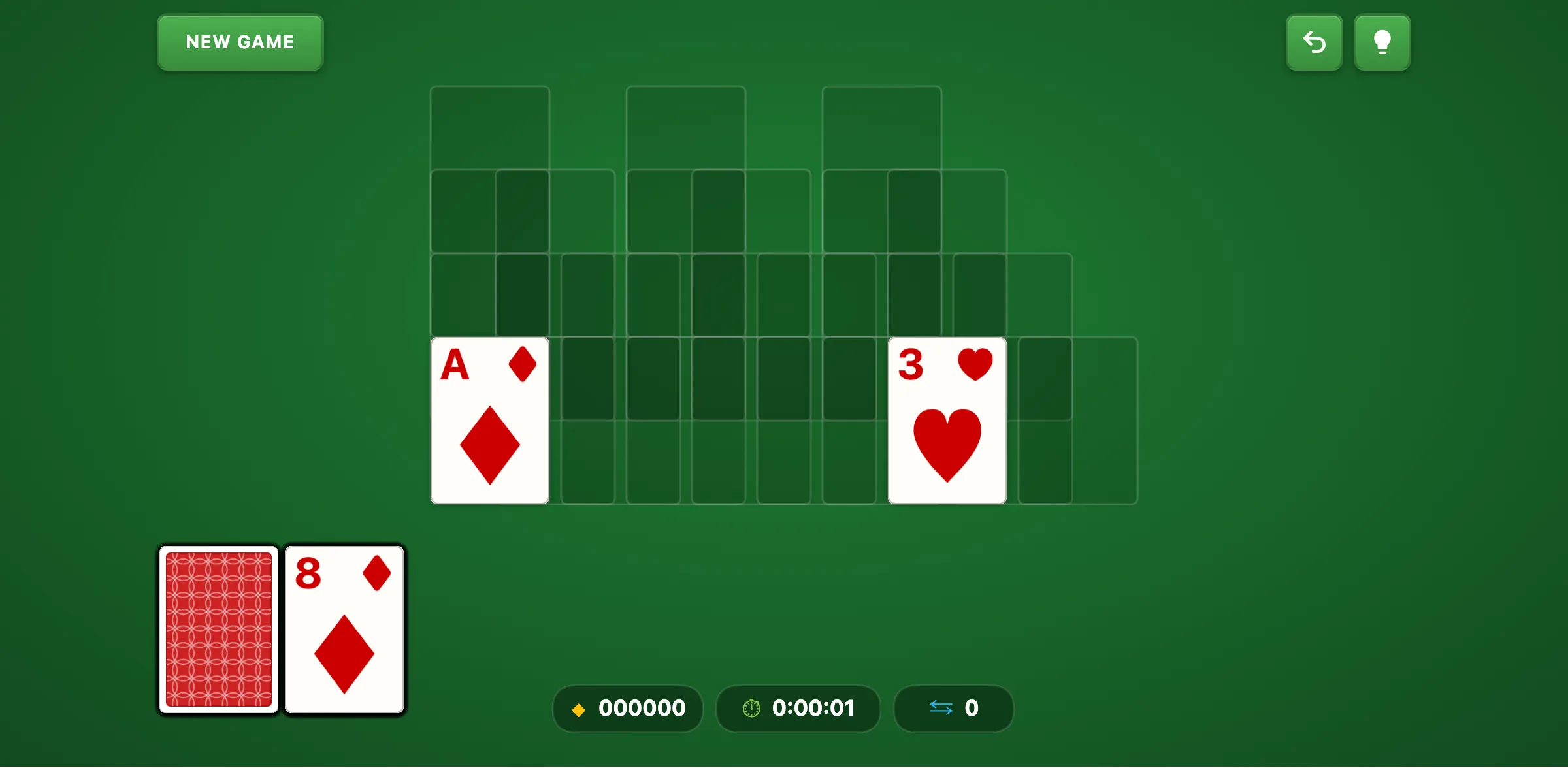
Before drawing from the stock, scan all three peaks thoroughly. A card you missed might continue your chain. The scoring system massively rewards long chains — a single 15-card chain is worth more than fifteen 1-card plays.
2. Prioritize peak cards over base cards
Removing a card from the top of a peak reveals 2 cards beneath it, while removing a base card reveals nothing. When you have a choice between two cards of the same rank, pick the one higher in the peaks.
3. Plan for wrapping
Remember that Kings connect to Aces. If you see a King and an Ace near each other in the peaks, you can chain through them: ...Q → K → A → 2... This wrapping ability opens up paths that aren't obvious at first glance.
4. Clear one peak at a time when possible
Fully clearing a peak early reduces the number of cards you need to manage and often creates a cascade of revealed cards. Focus your chains on one peak rather than spreading moves across all three.
5. Count your stock cards
You start with 24 stock cards. If you've drawn 20 and still have most of the peaks intact, the game is likely lost. Adjust your strategy based on remaining stock — be more aggressive with risky moves when you have plenty of draws left.
TriPeaks vs Golf vs Pyramid
| Feature | TriPeaks | Golf | Pyramid |
|---|---|---|---|
| Matching rule | ±1 rank | ±1 rank | Pairs summing to 13 |
| Layout | 3 peaks (28 cards) | 7 columns (35 cards) | Pyramid (28 cards) |
| Hidden cards | Yes (face-down) | No (all face-up) | No (all face-up) |
| Wrapping (K↔A) | Yes | Varies by rules | No |
| Win rate | 60–80% | 30–50% | ~5% (strict) |
| Scoring | Chain multiplier | Cards remaining | Pyramid cleared |
Common Mistakes
- Drawing too eagerly: Always scan all three peaks before touching the stock. A missed card costs you the chain multiplier.
- Ignoring the peaks: Base row cards don't reveal anything when removed. Prioritize upper cards that unlock hidden ones.
- Forgetting wrapping: K→A and A→K are valid moves. Missing these connections cuts your chains short.
- Spreading moves evenly: It's usually better to focus on one peak at a time than to nibble equally at all three.
Ready to play? Try TriPeaks Solitaire free online → If you enjoy the chain-building mechanic, also try Golf Solitaire for a similar but more challenging experience.